








|
|
|
|
|
|
|
|
|
|
|
|
|
|
|
|
||||||||||||
|
|
|
|
|
|
|
|
|
|
|
|
|
|
|
|
||||||||||||
|
Rinaldo
Vergeat fonda nel 1934 la "R. Vergeat" ed avvia la propria attività
costruendo modelli per fonderia. Durante gli anni '50 egli viene affiancato
dal figlio Giuseppe. La società assume la denominazione "R.
Vergeat & Figlio".
In quel periodo, in Italia si va diffondendo la tecnologia della vacuumformatura ed il mercato inizia a richiedere stampi. Giuseppe Vergeat intuisce che, una volta costruito il modello, il passo per ottenere uno stampo è abbastanza breve: una fusione e un buon lavoro di lima. I primi stampi vengono proprio costruiti così, con semplicità e passione. I clienti aumentano, ed anche la richiesta di stampi sempre più precisi... le lime non sono più sufficienti, si decide prima l'acquisto di una fresatrice e poi di un tornio. A metà degli anni '60, affiora una nuova tecnologia: la termoformatura con tranciatura simultanea. Giuseppe Vergeat inizia ad interessarsene e ben presto costruisce il primo stampo forma-trancia. Col passare degli anni, gli stampi "Vergeat" vengono conosciuti ed apprezzati un po' in tutto il mondo. Nel 1990 la terza generazione entra in azienda: Fabio affianca il padre Giuseppe. Oggi, la "R. Vergeat & Figlio" è una piccola azienda costruttrice di stampi sempre più sofisticati, contraddistinti da una particolare cura, tipicamente artigianale, per i dettagli e le finiture.
|
 I
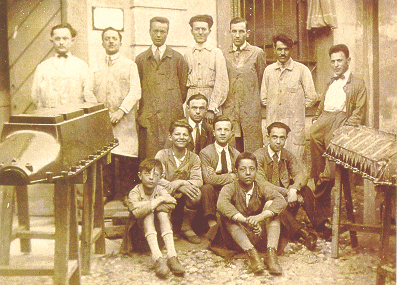
dipendenti della R. Vergeat negli anni '30 I
dipendenti della R. Vergeat negli anni '30The workers of R. Vergeat in the Thirties . |
|
|
|
Rinaldo Vergeat establishes
the "R. Vergeat" in 1934 and starts his activity manufacturing
wooden patterns for foundry. During the Fifties he is flanked by his son
Giuseppe. The society becomes "R. Vergeat & Figlio". |